

How to Choose Gold Purity for Jewellery
A gold ring can look perfect in the box and feel entirely wrong six months later if the purity does not suit the way you live. That is why knowing how to choose gold purity matters just as much as choosing the design itself. The right choice is not simply about prestige - it is about colour, strength, wearability and how the piece will sit within your wardrobe for years to come.
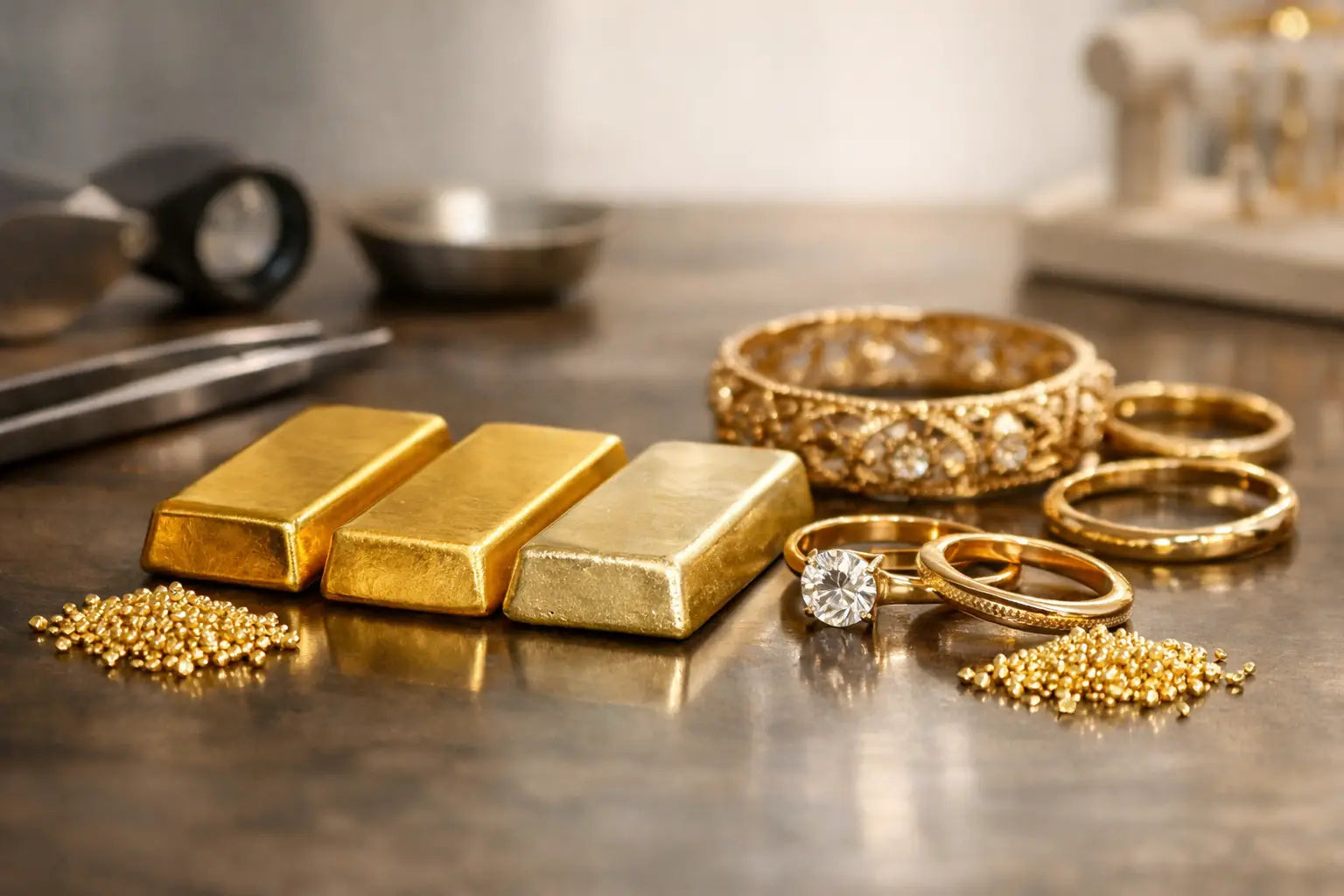
Gold purity refers to how much pure gold is present in a piece of jewellery, balanced with other metals to create its final character. Pure gold is 24 carat, but because it is naturally soft, it is rarely used for jewellery intended for regular wear. Instead, fine jewellery is most often crafted in alloys such as 9ct, 14ct or 18ct, each offering a different balance of richness and resilience.
How to choose gold purity by lifestyle
If you wear your jewellery every day, gold purity should be chosen with practicality in mind as well as aesthetics. Rings, bracelets and bangles tend to receive more knocks than pendants or earrings, so durability becomes especially relevant. Lower carat gold contains a higher proportion of alloy metals, which generally makes it harder and more resistant to daily wear.
For that reason, 9ct gold is often a strong choice for pieces that rarely come off. It offers dependable durability and a refined look, making it well suited to everyday chains, signet rings, stacking rings and bracelets. If your style is relaxed but polished, and you want jewellery that works from morning meetings to evening plans, 9ct often feels effortless.
18ct gold sits at a more luxurious end of the spectrum. With a higher gold content, it has a richer tone and an unmistakably elevated finish. It is beautifully suited to occasion pieces, heirloom designs, engagement rings and jewellery chosen as a lasting marker of a milestone. It is still appropriate for everyday wear, but it is worth understanding that higher gold content can mean a slightly softer composition.
This is where the decision becomes personal rather than purely technical. If you want a piece to feel weighty, warm and unmistakably precious, 18ct may be exactly right. If you prioritise resilience above all and prefer a slightly more understated tone, 9ct may serve you better.
Understanding the difference between 9ct, 14ct and 18ct
The numbers themselves are straightforward once you know what they represent. 9ct gold contains 37.5 per cent pure gold. 14ct contains 58.5 per cent. 18ct contains 75 per cent. The remaining percentage is made up of other metals, which influence colour, hardness and overall performance.
9ct gold has a crisp, versatile appearance and is especially popular for modern fine jewellery designed for regular wear. It can be an excellent choice for those building a jewellery wardrobe with pieces they can layer and style without overthinking.
14ct gold sits neatly in the middle. It offers more of gold’s natural richness than 9ct, while still retaining strong everyday practicality. For buyers who want balance, 14ct often feels like the quiet sweet spot. It is particularly appealing if you love the idea of fine jewellery that feels elevated but not overly formal.
18ct gold is prized for its sumptuous colour and higher precious metal content. It has a depth and softness to its tone that many collectors and design-led buyers favour, particularly in rings and bespoke pieces where craftsmanship and material presence are central to the appeal.
None of these purities is universally better. The right one depends on how you wear your jewellery, what look you prefer and whether the piece is intended as a fashion staple, a signature piece or a future heirloom.
Colour matters as much as purity
When considering how to choose gold purity, colour should never be treated as an afterthought. The purity level influences how yellow, warm or subtle the finished piece appears, especially in yellow gold. Higher carat yellow gold tends to have a deeper, more saturated tone, while lower carat gold can look slightly lighter and more restrained.
That difference can completely change the personality of a design. A classic chain in 18ct yellow gold often feels opulent and dress-led, while the same silhouette in 9ct yellow gold may read as more minimal and contemporary. Neither effect is superior. It simply depends on the statement you want the jewellery to make.
The same principle applies to white gold and rose gold. Alloy composition plays a significant role in the final shade, and different purities may produce subtle shifts in warmth or brightness. If you tend to wear cool-toned tailoring, white gold may complement your wardrobe beautifully. If your style leans softer, warmer or more romantic, rose gold can bring a flattering glow. Purity and colour work together, so it is wise to judge them as a pair rather than in isolation.
Match the purity to the type of jewellery
A pendant worn close to the skin experiences less impact than a ring worn on the hand every day. That should shape your decision. Earrings, necklaces and occasion bracelets allow more freedom to choose based on colour and precious feel, because they are generally exposed to less wear. Rings and bangles, by contrast, need to stand up to more contact with hard surfaces, handwashing, beauty products and everyday movement.
For engagement rings and wedding bands, many buyers lean towards 18ct for its richness and enduring sense of significance. Others prefer 9ct or 14ct for a more practical balance, particularly if they lead active lifestyles or intend to wear the ring without pause. There is no single rule. The point is to choose with honesty about how the piece will actually be worn, not how you imagine it might be worn on its best day.
If you are commissioning a bespoke design, this conversation becomes even more nuanced. Gemstone setting style, band width, finish and intended use all affect which purity feels most appropriate. A refined, highly polished ring designed for regular wear may call for one approach, while a statement cocktail ring reserved for events may allow another.
Hallmarks, value and what you are really paying for
Gold purity also shapes the intrinsic value of a piece, but material alone never tells the whole story. Craftsmanship, design complexity, setting work and finishing all contribute to what makes fine jewellery desirable and lasting. Higher purity gold contains more pure gold, which contributes to its prestige, but a well-made 9ct piece can still be exceptionally beautiful and worthy of a place in a considered collection.
This is why hallmarks matter. A hallmark confirms the precious metal content and provides reassurance that the jewellery is exactly what it claims to be. It is one of the clearest signs of integrity in fine jewellery and should always form part of a confident purchase.
For many buyers, gold purity is also tied to emotion. A piece bought to mark an engagement, anniversary or major personal milestone often carries a desire for greater gold content because the occasion feels significant. That instinct is completely valid. Jewellery is never only functional. It is deeply personal, and the purity you choose can reflect how you want that moment to be remembered.
How to choose gold purity with confidence
The clearest way to decide is to ask yourself three questions. First, will this be an everyday piece or an occasional one? Second, do you prefer a softer, richer gold tone or a more subtle finish? Third, are you buying for style, sentiment, longevity, or a blend of all three?
If your answer is everyday wear with practical ease, 9ct is often an excellent foundation. If you want a middle ground with both richness and resilience, 14ct is highly appealing. If you are drawn to depth of colour, a more luxurious feel and the romance of higher gold content, 18ct is often the natural choice.
There is elegance in choosing jewellery that truly fits your life. The most beautiful piece is not the one with the highest number stamped inside it, but the one whose material, design and purpose feel perfectly aligned. When gold purity is chosen well, the jewellery does not simply look right - it lives well with you, and that is where lasting style begins.