

The Future of Lab Grown Diamonds in Fine Jewellery
A diamond’s meaning has never rested solely on where it began. It lives in the proposal held close, the anniversary marked with intention, the pair of earrings chosen to celebrate a new chapter. The future of lab grown diamonds is therefore not simply a story of technology. It is a story of how modern clients are defining luxury: through beauty, craftsmanship, personal values and the freedom to create something that feels entirely their own.
For fine jewellery lovers, lab grown diamonds have become a considered choice rather than a compromise. They possess the same essential chemical composition, crystal structure and optical character as mined diamonds, yet their place in the market is creating new possibilities for design-led jewellery. That shift deserves a closer look, particularly for anyone choosing an engagement ring, wedding band or diamond piece intended to be worn and treasured for years.
The Future of Lab Grown Diamonds Is Design-Led
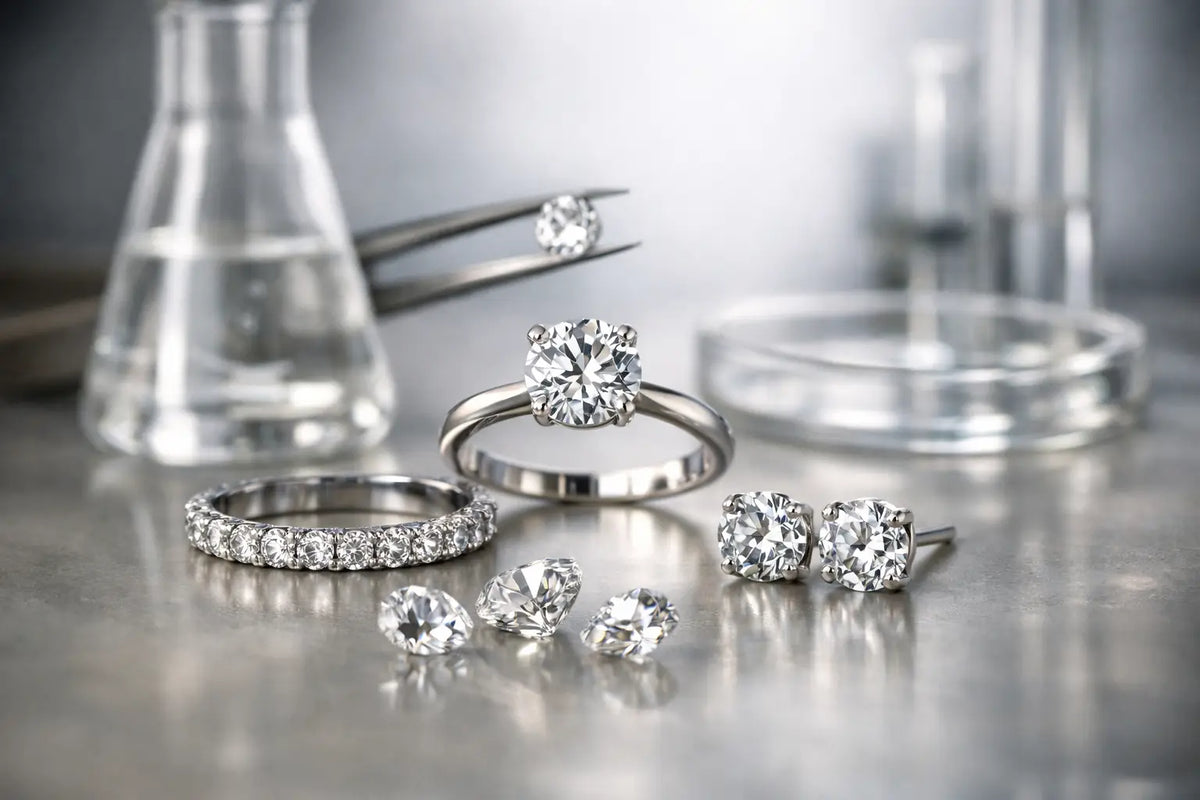
Lab grown diamonds are created under controlled conditions that replicate the forces involved in diamond formation. The two principal methods, High Pressure High Temperature and Chemical Vapour Deposition, produce real diamonds rather than imitations. They are not cubic zirconia or moissanite, and they can be graded using the familiar measures of cut, colour, clarity and carat weight.
What changes is the design conversation. A larger centre stone, an intricate halo, graduated diamond-set shoulders or a more generous tennis bracelet can become easier to consider within a particular budget. For a client with a clear aesthetic in mind, that room can be transformative. It allows attention to move towards proportion, setting detail and the way a jewel sits on the hand or catches the light in motion.
This does not mean carat weight should become the only measure of desirability. A beautifully cut diamond with balanced proportions can appear more lively and refined than a larger stone selected without care. In fine jewellery, brilliance is never accidental. The skill of the setting, the quality of the metal and the harmony of every element remain central to the finished piece.
Bespoke pieces can feel more personal
The most compelling future for lab grown diamonds may be in bespoke jewellery. A client may wish to reinterpret a family-inspired silhouette with a contemporary centre stone, create matching wedding bands with discreet diamond details, or commission a pendant that marks a personal achievement. Lab grown diamonds offer another route to realise that vision without diminishing the importance of design.
For an engagement ring especially, the question is no longer simply, “What size diamond should I choose?” It can become, “What will feel unmistakably like us?” Perhaps that is an elegant oval in platinum, an architectural emerald cut in 18ct gold, or a scattering of round brilliant diamonds across a sculptural band. The finest result is one that reflects the wearer, not a passing expectation.
Traceability Will Matter More, Not Less
As interest in lab grown diamonds grows, clients are likely to ask more discerning questions about provenance, production and documentation. That is a positive development. Luxury should invite confidence, and confidence comes from clear information rather than broad promises.
A diamond grading report, where applicable, remains an important part of the buying process. It records the stone’s key characteristics and identifies it as laboratory grown. The exact grading laboratory and the details available can vary by diamond, so it is wise to review the documentation alongside the stone’s cut, measurements and overall appearance.
The wider environmental picture also calls for nuance. Lab grown diamonds require significant energy to create, while their impact can differ depending on the energy sources and manufacturing practices involved. Mined diamonds have their own complex social, environmental and supply-chain considerations. Neither choice should be reduced to a slogan. A thoughtful purchase comes from asking informed questions and choosing a jeweller who can speak clearly about materials, workmanship and the particular piece you are considering.
Value Means More Than a Certificate
A frequent question around lab grown diamonds concerns future value. It is sensible to approach this openly: fine jewellery should first be chosen for its design, emotional significance and quality of make, rather than with an assumption of financial return.
Market values for lab grown diamonds can move differently from those of mined diamonds, and resale outcomes are not guaranteed for either. The value retained by a finished jewel also depends on more than its centre stone. Precious metal weight, craftsmanship, condition, brand desirability, the quality of the setting and the strength of the design all play a part.
For some, this makes a lab grown diamond the ideal choice for a striking, highly wearable jewel that prioritises visual impact and personal expression. For others, the rarity narrative traditionally associated with mined diamonds remains a meaningful part of the purchase. There is no universal answer. The right diamond is the one that aligns with your priorities and that you will be delighted to wear.
Craftsmanship remains the luxury
The future of lab grown diamonds will not replace the artistry of fine jewellery. If anything, it places greater emphasis on it. A diamond is only as captivating as the setting that frames it and the hands that bring the piece to life.
Consider the difference between a generic solitaire and one refined through small but significant decisions: the height of the setting, the delicacy of the claws, the curve of the gallery, the warmth of 18ct yellow gold against the stone, or the cool precision of platinum. These details determine comfort, durability and character. They are also what make a jewel feel considered long after the first moment of admiration.
For everyday diamond jewellery, thoughtful construction is equally valuable. Earrings should balance securely, bracelets should move beautifully on the wrist, and diamond-set bands should be made with a setting style suited to the wearer’s routine. A concierge conversation can help translate a visual preference into a piece that works in real life, whether it is intended for daily wear or reserved for special occasions.
How Buying Habits May Change
The next chapter is likely to bring a more confident, less divided approach to diamonds. Rather than viewing lab grown and mined diamonds as opposing choices, clients may select according to the occasion and the story they wish to tell. A lab grown diamond engagement ring might be chosen for its scale and modernity, while a mined diamond inherited through family could be reset into a new design. Both can hold immense emotional value.
We may also see a greater appetite for distinctive cuts and compositions. As buyers become more informed, the appeal of jewellery may move beyond the familiar round brilliant solitaire towards elongated cushions, pear shapes, antique-inspired cuts and unexpected arrangements of diamonds and coloured gemstones. Individuality will continue to be one of the most enduring expressions of luxury.
At Harper Kendall, that perspective sits naturally alongside the art of beautiful design. Whether a diamond is lab grown or mined, the goal is the same: to create jewellery with presence, proportion and a sense of permanence in the wearer’s life.
Choosing With Confidence
When considering a lab grown diamond, begin with the design you genuinely want to wear. Then consider the diamond’s cut and proportions, its certification, the metal and setting style, and how the piece will suit your day-to-day life. A bezel setting may offer a sleek, protective finish; fine claw settings can give a centre stone an airy, classic presence. Neither is inherently better. The choice depends on your style and practical needs.
It is also worth looking beyond a single specification. Two diamonds with similar grades can appear different due to their cut, transparency and make. Images and videos are useful, but expert guidance is especially valuable when selecting a significant stone or commissioning a bespoke piece.
The most beautiful diamond jewellery is not defined by a debate about origin. It is defined by the feeling it creates when it becomes yours: a considered design, crafted with care, chosen for a moment that deserves to be remembered.