
8 Engagement Ring Redesign Examples to Consider
An engagement ring can carry decades of sentiment while no longer reflecting the person who wears it. The most compelling engagement ring redesign examples preserve that emotional connection, then reinterpret the piece through proportion, metal, diamond detail and a setting designed for modern life. A redesign is not about erasing the past. It is about giving a meaningful stone or treasured ring a beautiful new chapter.
Whether you have inherited a ring, your own style has evolved, or an original setting no longer suits everyday wear, the right design begins with a close look at the piece itself. The diamond cut, the condition of the metal, any hallmarks and the story behind the ring all inform what is possible.
What to consider before redesigning an engagement ring
Before choosing a new silhouette, have the existing ring assessed by an experienced jeweller. Stones should be checked for chips, abrasions and secure settings, particularly if the ring has been worn for many years. Older diamonds may have distinctive proportions or hand-cut facets that deserve a design tailored around their individual character rather than a standard setting.
It is also worth deciding what must remain. For some, that is the centre stone alone. For others, it may be a particular engraving, an heirloom band, a side diamond or even a small section of original gold incorporated into the new piece. A redesign can be complete or subtle, and neither approach is more meaningful than the other.
Practicality matters as much as beauty. A high-profile setting can create presence but may catch on knitwear or gloves. A low-set design feels refined and easy to wear, although it can limit the profile of a wedding band. Your lifestyle, preferred metal colour and the rings you wear every day should all shape the brief.
8 engagement ring redesign examples
1. A solitaire reset in a refined four-claw setting
A classic solitaire reset is often the right choice for a beautiful inherited diamond that has been hidden by a heavy or ornate setting. Rehousing the stone in a finely proportioned four-claw setting can reveal more of its shape and allow light to move freely around it.
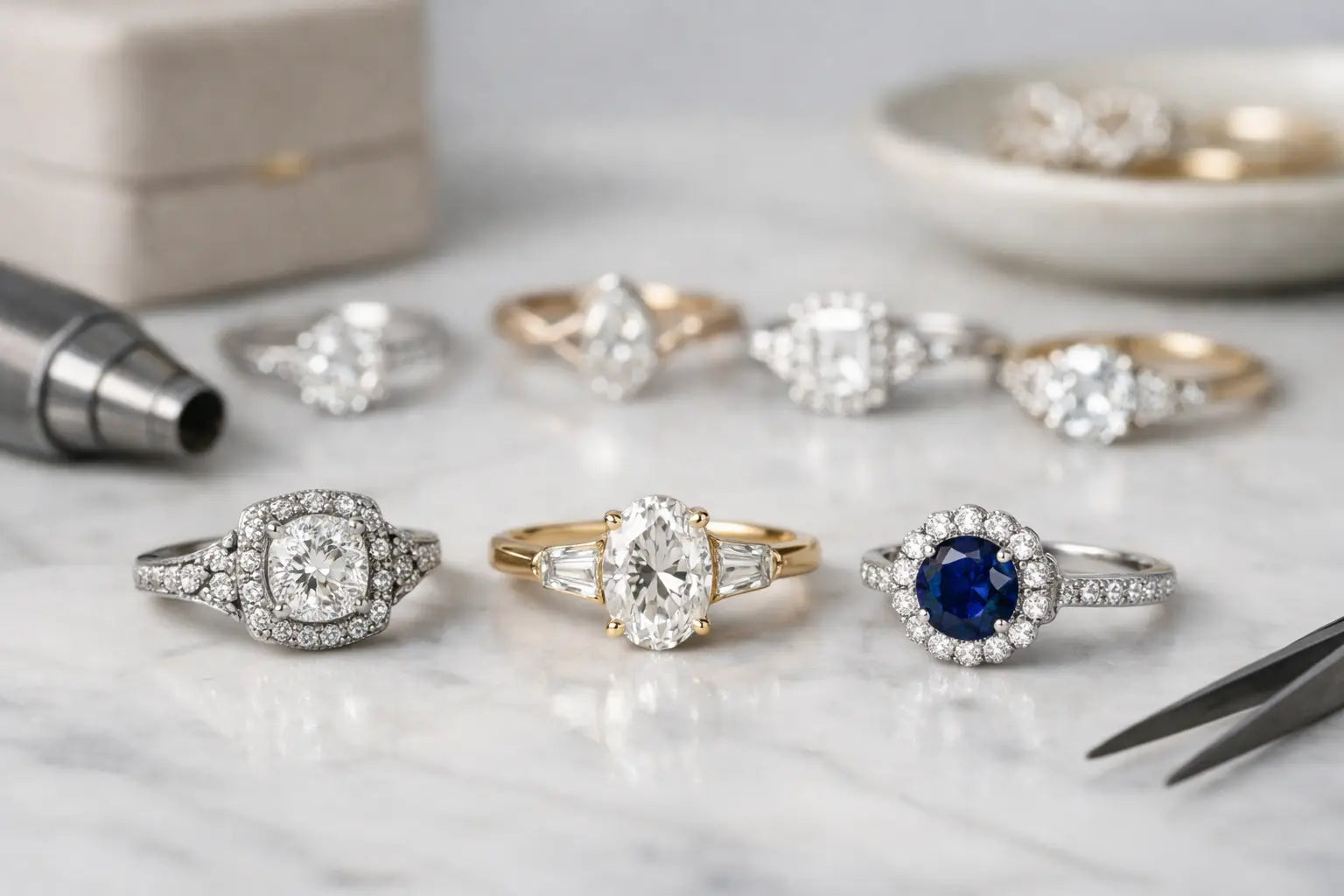
This approach works particularly well for round, oval and cushion-cut diamonds. Choose platinum for a crisp, enduring white-metal finish, or warm 18ct yellow gold with platinum claws for contrast. The result is familiar enough to feel timeless, yet considered enough to feel entirely your own.
2. An old-cut diamond with a modern bezel
Old mine, old European and transitional-cut diamonds often have a softer, more romantic character than contemporary brilliant cuts. Rather than forcing them into a conventional setting, a slim bezel can frame their individuality. The clean line of metal brings a contemporary edge while protecting the girdle of an older stone.
A full bezel offers a smooth, secure finish, making it an elegant option for someone with an active routine. A partial bezel leaves more of the diamond visible and introduces a lighter, more sculptural feel. This is one of the most successful engagement ring redesign examples for balancing heritage with modern styling.
3. A three-stone ring using heirloom diamonds
A single-stone ring can become a distinctive three-stone design when additional family diamonds are available. The centre stone remains the focal point, while tapered baguettes, pear-shaped diamonds or smaller round stones bring scale and symbolism. Some couples see the three stones as representing a relationship’s past, present and future, but the design is equally compelling for its balanced proportions alone.
Tapered baguettes create a sleek, architectural profile, whereas pears add softness and movement. The important detail is matching the side stones to the centre diamond rather than simply adding size. A well-composed three-stone ring feels intentional from every angle.
4. A halo that gives a modest centre stone more presence
A fine diamond halo can transform the visual scale of a centre stone without losing its original identity. It is especially effective where an inherited diamond is meaningful but smaller than the wearer’s preferred proportion. The surrounding diamonds create a luminous outline and offer a more expressive, occasion-led look.
The trade-off is that a halo requires careful craftsmanship. The outer diamonds should complement the centre stone’s shape, with delicate claw work and even spacing so the result remains refined rather than crowded. A hidden halo beneath the centre stone is a quieter alternative, adding crafted brilliance visible from the side while retaining the simplicity of a solitaire from above.
5. A vintage cluster made more wearable
Traditional cluster rings often feature a centre diamond surrounded by smaller stones in a raised, floral arrangement. They can be charming but impractical if the setting is high, the claws are worn, or the ring catches frequently. Retaining the original cluster layout while rebuilding it at a lower profile can make the design far easier to wear.
A scalloped edge in platinum or 18ct gold preserves the romance of the original style. Where the surrounding stones are mismatched or damaged, a bespoke jeweller may be able to rebalance the arrangement with carefully selected replacements, while retaining as many original diamonds as the design allows.
6. An east-west setting for a new point of view
An oval, marquise or emerald-cut diamond set horizontally can make a familiar stone feel unexpectedly fresh. This east-west orientation creates a wider visual line across the finger and brings a fashion-led perspective to a classic diamond.
It is a particularly elegant redesign for someone drawn to clean, contemporary jewellery but reluctant to part with a sentimental stone. A plain polished band keeps the focus on the diamond; tapered shoulders can add a more tailored finish. Consider how the wedding band will sit alongside it, as a curved or shaped band may be needed for a close fit.
7. A diamond solitaire with coloured gemstone accents
If the original engagement diamond feels too traditional on its own, coloured gemstones can introduce personality without overwhelming it. Sapphires offer deep blue distinction, emeralds create rich contrast and rubies lend an unmistakably romantic note. Small accent stones set into the shoulders can keep the design sophisticated and wearable.
This approach depends on gemstone durability and setting style. Sapphires and rubies are well suited to frequent wear, while emeralds need more considered protection because of their natural characteristics. A design consultation should also consider whether the coloured stones should match an anniversary month, a family connection or simply a favourite shade.
8. Two rings reimagined as one considered design
When two inherited rings hold equal sentimental value, combining their diamonds or gold can create a ring with an unusually personal story. One stone may become the centrepiece while smaller diamonds form a pavé shoulder, a subtle halo or a hidden detail beneath the setting. The original metal may be melted and recast where its composition and condition make that suitable, though this should be discussed carefully before any irreversible work begins.
Another option is to preserve one ring intact and use the other as the source for the new setting. This retains an heirloom in its original form while allowing its companion piece to become part of a future engagement ring. Sentiment is not measured by how much material is used, but by the thought given to what is kept.
Choosing a redesign that will still feel right years from now
The finest redesigns do not chase a passing look. They take a personal point of view and express it through enduring materials, precise proportions and a setting built to be worn. Consider the jewellery already in your collection: do you reach for yellow gold, favour clean lines, or prefer the radiance of diamond-set pieces? An engagement ring should sit naturally within that personal language.
Ask to see the proposed design from above, side-on and alongside a wedding band. Details such as band width, setting height and claw style can alter the final impression more than expected. It is also wise to keep photographs of the original ring, record any hallmarks, and ensure its new form is documented for valuation and insurance purposes.
A bespoke engagement ring redesign is an opportunity to honour what has been loved before while creating something made for the life ahead. Let the original stone guide the design, but let your own style have the final word.