
Diamond Solitaire vs Halo: Which Ring Suits You?
A ring can feel completely different on the hand from the way it appears in a photograph. That is the real consideration behind diamond solitaire vs halo: not simply which design has more sparkle, but which one expresses your style, suits your lifestyle and gives the centre diamond the presence you want.
A solitaire is defined by restraint. A halo is designed for radiance and visual impact. Both are enduringly elegant, both can be tailored beautifully in platinum or gold, and neither is inherently the better choice. The right ring is the one whose proportions, craftsmanship and character feel personal from the first fitting to every day that follows.
Diamond solitaire vs halo: the defining difference
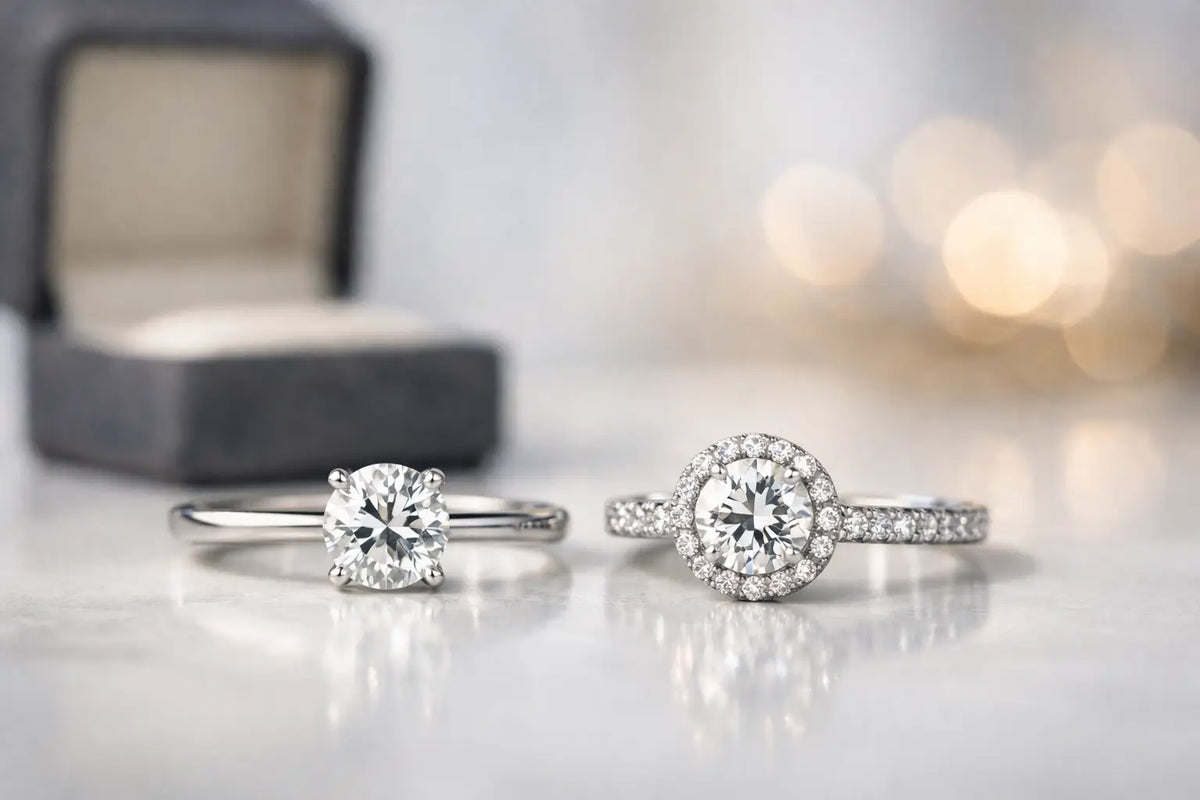
A diamond solitaire places one principal diamond at the centre of the design. It may be held in classic claws, a refined bezel, or an elegant cathedral setting that lifts the stone towards the light. With no surrounding diamonds competing for attention, the centre stone becomes the entire story.
A halo setting frames the centre diamond with a close border of smaller diamonds. This diamond surround can follow the shape of a round, oval, pear, emerald or cushion-cut stone, creating a brighter outline and a more intricate profile. Some halos sit neatly beneath the centre diamond for a subtle glimmer, while others are deliberately defined to create a bolder silhouette.
The difference is not only visual. A solitaire celebrates the individual character of one diamond - its cut, clarity and shape. A halo creates a composed piece of jewellery, where the central stone and surrounding diamonds work together to deliver a fuller, more luminous effect.
The case for a solitaire ring
There is a reason the solitaire remains one of the most recognisable engagement ring designs. Its appeal lies in its clarity of purpose. A beautifully cut diamond has room to breathe, allowing light to travel through the stone and reveal its natural fire and scintillation.
Solitaire rings are exceptionally versatile. A round brilliant solitaire feels timeless and assured; an oval solitaire can lengthen the look of the finger; an emerald-cut solitaire offers crisp geometry and quiet confidence. The setting changes the mood too. Fine claws create a delicate, barely there effect, while a bezel offers a sleek, modern frame around the diamond.
This simplicity also makes a solitaire an elegant foundation for a wedding ring stack. A straight band may sit neatly beside a low-profile bezel or a carefully considered claw setting, while a shaped wedding band can be commissioned when the centre stone sits lower to the hand. The look can evolve with anniversary bands, diamond-set wedding rings or mixed-metal styling without losing its original refinement.
A solitaire may be especially suited to someone who values understated luxury, clean lines and a diamond with a distinctive cut or exceptional light performance. It asks less of the design around it because the centre stone is intended to carry the visual weight.
What to consider before choosing a solitaire
With a solitaire, the centre diamond is more exposed visually, so its proportions deserve close attention. Cut quality is particularly significant in brilliant-cut diamonds, while step-cut shapes such as emerald and Asscher cuts tend to reveal more of the stone’s clarity characteristics.
The setting height matters as much as the diamond itself. A high-set solitaire can create dramatic light and an airy profile, but it may be less practical for hands that are constantly in motion. A lower basket or bezel setting offers a more streamlined everyday option without losing sophistication.
Why a halo ring makes an impression
A halo ring is designed to catch the eye. The surrounding diamonds create contrast around the centre stone, often making its outline appear larger and its overall presence more pronounced. For those drawn to glamour, detail and a little more brilliance from every angle, a halo has undeniable allure.
The design is particularly flattering with fancy-shaped diamonds. An oval halo can create a graceful elongated look, while a cushion halo softens the outline into something romantic and luminous. A pear-shaped diamond framed with a halo can feel wonderfully expressive, balancing vintage influence with contemporary polish.
Halo settings also offer a rich design language beyond the top view. A diamond-set gallery beneath the centre stone, a pavé band or an ornate basket can give the ring a sense of artistry that reveals itself gradually. This makes the halo a compelling choice for someone who wants their ring to feel like a statement piece rather than a minimal accent.
A well-designed halo should enhance the centre diamond, not overwhelm it. The finest examples maintain a considered relationship between the centre stone, the surrounding diamonds and the band. When those proportions are right, the effect is polished, dimensional and beautifully balanced.
The practical side of a halo setting
A halo has more diamond-set detail, which naturally means more areas to care for. Small stones should be checked periodically by a professional, particularly if the ring is worn every day. Soap, hand cream and ordinary life can settle beneath the setting, softening brilliance until the ring is cleaned properly.
This is not a reason to avoid a halo. It is simply part of owning a finely crafted diamond ring. Those who love the detail usually find the occasional care worthwhile. Choose a setting with quality workmanship, secure stone placement and a profile that feels comfortable for your routine.
Brilliance, size and proportion
The word “sparkle” can mean different things. A solitaire concentrates attention on the flashes of light within one diamond. A halo adds sparkle around the perimeter, creating a broader field of brilliance. If you want a design that reads as bright from a distance, a halo often has the advantage. If you are captivated by the depth and personality of a single stone, a solitaire can feel more compelling.
A halo can also make the centre diamond appear larger because the eye reads the diamond border as part of the overall face-up spread. Yet visual size is not the only measure of beauty. An expertly proportioned solitaire with a fine band can look strikingly elegant and can give the centre diamond a more pronounced, elevated presence.
Metal choice will shape the effect. Platinum and white gold bring a cool, crisp contrast that can emphasise the whiteness of diamonds. Yellow gold adds warmth and gives a solitaire a classic, heirloom-inspired quality, while a yellow gold halo ring can feel richly romantic. Rose gold offers softness and individuality, especially with oval, pear and cushion-cut designs.
Matching the ring to your personal style
Consider the jewellery you already reach for. If your wardrobe favours tailored silhouettes, polished essentials and pieces that work from weekday to occasion, a solitaire may feel immediately at home. It has a quiet confidence that pairs effortlessly with diamond studs, a fine pendant or a sculptural gold bangle.
If you enjoy texture, layered jewellery and design details that invite a closer look, a halo could be the natural choice. It carries a more decorative energy and can hold its own alongside diamond-set earrings, statement necklaces or other expressive pieces.
There is also the question of sentiment. Some choose a solitaire because they want an enduring design that can be reinterpreted through different wedding bands over time. Others choose a halo because the ring itself feels complete, celebratory and unmistakably theirs. Neither approach is more meaningful. The emotional connection comes from selecting a piece that reflects the person wearing it.
Setting, shape and everyday wear
The centre diamond shape can make the decision clearer. Round brilliant diamonds are equally at ease in solitaire and halo settings, moving from classic to more elaborate depending on the treatment. Ovals look graceful in both, although a halo can heighten their length and apparent scale. Emerald cuts often shine in a solitaire setting, where their architectural facets can take centre stage, though a refined geometric halo can create an Art Deco-inspired finish.
For active daily wear, think about edges and height. A smooth bezel solitaire is among the most streamlined options, while a low halo with carefully finished claws can be surprisingly practical. If you work with your hands, wear gloves often or prefer a ring that does not catch easily, communicate this from the outset. Design should support how you live, not ask you to change it.
For a truly individual piece, a bespoke jewellery consultation allows every element to be considered together: diamond shape, metal, setting profile, band width and the future wedding ring. Small decisions, such as the height of the gallery or the size of the halo diamonds, can transform how a ring looks and feels.
The most beautiful choice is rarely about following a rule. Try on both styles, view them in natural light, and notice which one makes you look at your hand twice. That instinct is often where a meaningful design begins.